Saturday, January 16, 2021

Prodigal Generation

 One of the most famous stories told by Jesus in the Bible is the parable of the prodigal son. The gist of the story is that a young man asks his dad for his inheritance and then heads off into the world, squandering his money on wild living. Then, when all the money is gone, it happens that there’s a famine in the country and he falls on hard times: really hard times. At the lowest point of his life, we find him working the worst of jobs, feeding pigs and even longing to eat some of the pig food because he’s so hungry. Finally he comes to his senses and decides to go back to his old dad. He returns to his father, contrite and ready to do even the most menial of work if his dad would just take him back. Of course (if you know the story) his dad is overjoyed to get his son back and throws a big party to celebrate the prodigal’s return. His older brother is not so happy and refuses to join the party. That’s how the story ends.
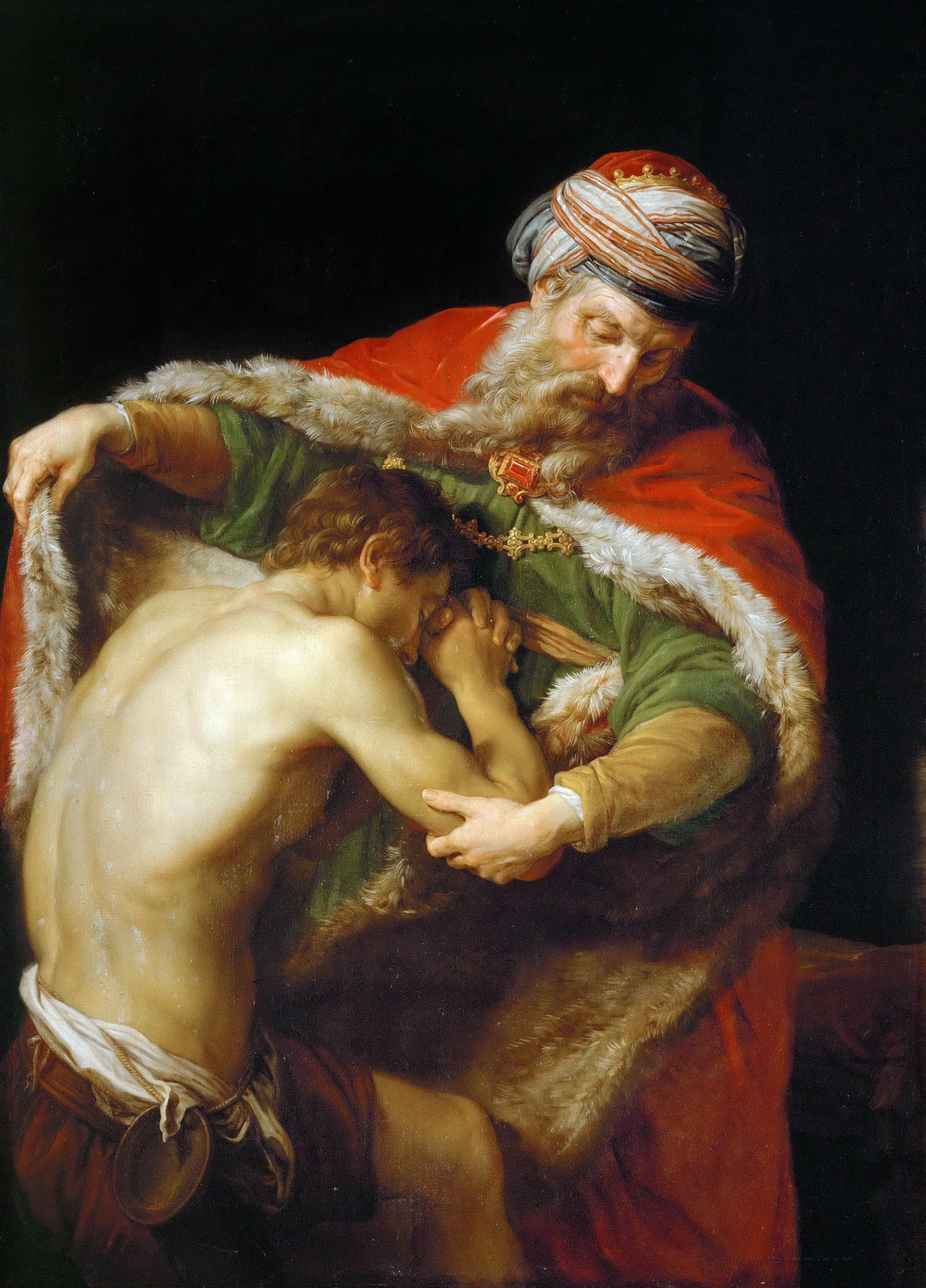
The Return of the Prodigal Son (1773) by Pompeo Batoni

I’m sure this story has been preached thousands of times in churches all around the world and for centuries. The main meaning is pretty clear, that God delights in us turning back to him, no matter what we’ve done. He’s ready to forgive us and bring us back into His family. Looking at the story in context (see Luke 15), it follows the parables of the lost sheep and the lost coin, all given in response to the religious folks of the time grumbling about Jesus hanging out with “tax collectors and sinners.” Jesus came to seek out sinners and bring them back to God. For anyone who wants to dig deeper into the true meaning of this passage I highly recommend Tim Keller’s book Prodigal God.

Recently I’ve been reflecting on the fact that a lot of young men and women, from their late teenage years through their 20’s, seem to turn away from God for a season.  Some do this as a full-on rebellion against their parents, against “old-fashioned” ways, or against any form of what’s seen to be “the establishment,” including the Church. 

But I think maybe a bigger section of young men and women turn from God in a more subtle way. They might consider themselves “believers” still, but maybe what they believe is less certain. They may pray sometimes, but less frequently. Heck they might even open a Bible now and then, but not too often. For sure, they don’t go to church very often, if ever, and for sure they don’t consider themselves to be members of a church. Their focus has shifted. That church stuff isn’t so important. They are more and more interested in the things of this world. They want to experience new things: new entertainments, new games, new movies, new music, new feelings. 

Jesus wrote about this in His parable of the sower of seed where He describes seed that fell among thorns which “are those who hear, but as they go on their way they are choked by the cares and riches and pleasures of life, and their fruit does not mature” (See Luke 8:4-18 for the parable and meaning). I might write about this in a future blog, but I have a different purpose and focus for this blog.

Continuing to reflect on the observation that young people drift away from the church, I realize that that’s my story too. I became a Christian at the age of 17 and through my university years I was pretty passionate about my faith, but through my 20’s I drifted away from God, increasingly enticed and bogged down in the pleasures and cares of this world. I hit rock bottom with a divorce, financial debts, and just a suitcase of clothes at the age of 28, when I moved to the United States. Then, through the influence of my now wife, Deanna, and the prompting of God, I “came to my senses” and slowly but surely I turned back to God. We started attending a church. I started praying more, reading the Bible, and seeking after God again. And like a prodigal returning to his father, my Father God gently restored me back into a relationship with Him. 

Fast forward 20 years or so and now this 50 year old is fully convinced that the most important thing everyone should focus on is their relationship with God. I encourage everyone to consider the most important relationship in your life which is between you and God, but I especially encourage those in their late teens or 20’s, who’re experiencing the world and all it has to offer to “come to your senses” sooner rather than later. Like a prodigal returning to their father, return to your Heavenly Father. He loves you and will restore you. There is nothing like it in this world.

Remember also your Creator in the days of your youth, before the evil days come and the years draw near of which you will say, “I have no pleasure in them”; (Ecclesiastes 12:1)

Wednesday, October 7, 2020

Faithful in the ordinary: ready for the extraordinary

 “And one Ananias, a devout man according to the law, well spoken of by all the Jews who lived there, came to me, and standing by me said to me, ‘Brother Saul, receive your sight.’ And at that very hour I received my sight and saw him.” (Acts 22:12-13)

St Paul (originally Saul) is well known and prolific in his writings in the New Testament, but have you ever heard of Ananias?  Actually you may have heard about a fella called Ananias and his wife Sapphira who lied about their gifts and promptly dropped dead in the early days of the church in Jerusalem, but I’m talking about a different Ananias, from Damascus.  We know very little about him from the Bible other than he was from Damascus and Paul said he was “a devout man.” But then one day God used him to restore the sight of Saul who would then go on to became one of the most influential early Christian apostles, shifting the course of history. The action of Ananias was instrumental in God’s plan for the spreading of the early church and in causing a large chunk of the New Testament to be written. This simple act by a devout man was God’s key to unlock a new chapter of history.

https://commons.wikimedia.org/wiki/File:Saint_Paul_Ananias_Sight_Restored.jpg.

So, I’ve been pondering (as I’m prone to do), that maybe God’s purpose for us in the day-to-day is to focus on being simply faithful in the ordinary. Like Ananias who was “a devout man,” we also need to be devout. We need to think about God, read the Bible, pray, worship, trust in Jesus, seek the guidance of the Holy Spirit etc... We need to love God and love people every day. We might not see unusual or miraculous things happening all the time, at least not in a spectacular way, but day by day we can grow in our knowledge of God, trusting in His provision, protection, and guidance.

But, also like Ananias, we need to be ready for God to ask us to do something extraordinary or unexpected. It may be one thing you do in your whole lifetime that shifts the course of history, or it may be several smaller acts of faithfulness that have surprising and unexpected outcomes that only God could orchestrate. Either way we need to be ready, and open for Him to call us to do it in His good timing.  

So my challenge to you (and to me!) is to be faithful in the ordinary, but be ready for the extraordinary!

Wednesday, August 26, 2020

A Fundamental Choice

There are only two kinds of people in the end: those who say to God, "Thy will be done," and those to whom God says, in the end, "Thy will be done." (C.S. Lewis, The Great Divorce)
<span>Photo by <a href="https://unsplash.com/@garri?utm_source=unsplash&amp;utm_medium=referral&amp;utm_content=creditCopyText">Vladislav Babienko</a> on <a href="https://unsplash.com/s/photos/choose?utm_source=unsplash&amp;utm_medium=referral&amp;utm_content=creditCopyText">Unsplash</a></span>
 
Over the past couple of months I've been pondering something.  Hopefully I can articulate it well enough to get across something helpful and not just state the bleedin' obvious!

It occurs to me that, in how we live our life, and particularly how we relate to spiritual questions, there is a fundamental choice at the start. We either: (1) seek to find out what God wants from us, or (2) we do whatever we want. Beyond this choice there are others along the way about how we live our lives, how we make decisions, life plans, morals, doing what is best, interactions with others, etc. But I think this first and fundamental choice sets the tone and direction for a whole bunch of decisions down the road.

Maybe that's plain and obvious to the reader but I think that often we don't think about this enough. It's really getting to the core motivation for your life. Do you want to live to please God, or to please yourself? If you don't consider this choice then I think there are many dangers. You can do the right things for the wrong reasons, or you can drift through life not thinking too deeply about anything at all. This doesn't mean you get it right or wrong. It doesn't make you better or worse in the final analysis, but it does set your mind and your will in a particular direction.

As you'd expect, the Bible has a lot to say about seeking God and the wisdom in doing so in order to plot a good path for your life, or the dangers of neglecting to seek God. I could share with you a whole pile of references, but I want to give just this one:
In those days there was no king in Israel. Everyone did what was right in his own eyes. (Judges 21:25)

Out of context this verse seems innocuous and maybe ambivalent about seeking God or not.  So what if everyone did what they thought was right? But this is the final verse in the book of Judges which lays out the story of how the young nation of Israel gradually turned away from seeking God and in the end "everyone did what was right in his own eyes." In other words, and in blunt terms, they turned their back on God and did whatever they wanted. After all they'd been through as a nation, and despite all the times God had helped them and restored them, their default was to fall back to just doing whatever they wanted, ignoring God and pleasing themselves.

It's not hard to see the parallels with modern Western ideas and attitudes. There seems to be an inexorable shift away from thinking about what is right or wrong in the eyes of God, and more and more consideration for individual preferences and proclivities or self-serving ideologies that ignore the needs of others. I'm writing this blog during an election year in the US, so I don't throw fuel on the fire by naming specifics. For sure I could easily pick a side and throw some stones at the other, but that would miss the point of what I'm trying to convey here.  Ultimately we need to get back to the question of whether we're seeking to please God or please ourselves (or our political party).

I just finished reading a very intriguing book by a fellow Brit called Peter Jones with the title "One or Two: Seeing a World of Difference." Some of his initial statements are quite bold such as stating that there are really only two religions, but he backs them with convincing arguments and astute observations from history and current trends. The backbone of his observations is based on Romans 1 where the apostle Paul says "For although they knew God, they neither glorified Him as God nor gave thanks to Him, but they became futile in their thinking and darkened in their foolish hearts." He then goes on to unpack why a whole bunch of current ideas and movements are antithetical to God and are essentially us turning away from Him to worship creation or worship ourselves who are part of creation. It's a very thought-provoking book and I recommend it highly. (If you prefer videos rather than books you can watch his lecture series here instead.)

So, making this personal, what are we to do? I think it boils down to our choice to either seek God or not.  We either try to figure out what He wants and pursue it, or we just do what we want and try to ignore Him.

What do you think?

Sunday, May 10, 2020

Seemly So

Just over a year ago I shifted to a new English Bible version. For the most part I like the English Standard Version (ESV) though occasionally it uses odd words or translates something from the Greek in a way I wouldn't have expected when compared to some other popular versions.  One of the most surprising ones that hit me recently is a verse from Paul's letter to the Philippians that precedes an awesome and very well known passage about not being anxious about anything (Philippians 4:6-7). So here it is, verse 5, from the ESV translation:
Let your reasonableness be known to everyone. The Lord is at hand; (ESV)
Reasonableness? Huh, I don't remember that from other versions.  In most other English translations they use the word "gentleness" or "gentle spirit" and not "reasonableness." Interesting.

Rediscovering Jesus

At the same time this verse has been on my mind, as a church we've been re-reading the Gospels to rediscover how Jesus conducted Himself on Earth, particularly in the context of the disruption to our normal rhythms of life due to the current coronavirus pandemic. Somehow, despite all the activity and apparent busyness of His ministry on Earth, Jesus always had time for individuals and made time to be alone with God the Father.  As I'm reading through the Gospels, one of the characteristics that always hits me about Jesus is His gentleness, particularly for anyone hurting or in need of healing. Matthew's Gospel (quoting Isaiah) says of Jesus:
"a bruised reed he will not break,
and a smoldering wick he will not quench,
until he brings justice to victory;
and in his name the Gentiles will hope.
"
There we have it: the gentleness of Jesus, lifting up those who are broken and rekindling the flame of those near to burning out. Gentle restoration.

It's all Greek to me

So, back to my curiosity on the ESV translation of this word "reasonableness" that is often translated "gentleness."  To be fair, in the footnotes to the ESV translation it also says "or gentleness" meaning it could be translated with either word. But what is this Greek word? OK, I'm no Bible scholar and I don't read Greek so I'm relying here on some online study tools. The word in the original Greek is "epieikes."  Looking at a couple of definitions for this word it means "appropriate, i.e. (by implication) mild:—gentle, moderation, patient."  Huh, that's cool. In another it's defined as "what is reasonable; (1) seemly, suitable, (2) equitable, fair, mild, gentle."

Let's be reasonable

Reasonableness. Seemly.  I love these old words. More than that, I love the meaning and the weight behind them.  We live in the social media age where there are a whole bunch of people yelling out their opinions, whilst castigating the words of others and misrepresenting them in the worst ways possible.  The media spin born out of the age of 24 hour news has gone into overdrive in the internet age. There seems to be no civility, no common ground, no reasonableness.  It's all very unseemly indeed.

So, my call to anyone reading this, and the challenge to myself too, is that we get back to the wisdom of the Bible. If you are a follower of Christ, do as He did and follow the guidance laid out for us by the writers of the New Testament instructing us to be gentle, reasonable, seemly.  If you're not a follower of Christ, I strongly recommend you check out what He said and did in the Gospels. And I think the advice from Paul is good for everyone - "Let your reasonableness be known to everyone. The Lord is at hand."


Saturday, March 28, 2020

Two questions

"Then I saw a great white throne and him who was seated on it. From his presence earth and sky fled away, and no place was found for them. And I saw the dead, great and small, standing before the throne, and books were opened. Then another book was opened, which is the book of life. And the dead were judged by what was written in the books, according to what they had done. And the sea gave up the dead who were in it, Death and Hades gave up the dead who were in them, and they were judged, each one of them, according to what they had done. Then Death and Hades were thrown into the lake of fire. This is the second death, the lake of fire. And if anyone's name was not found written in the book of life, he was thrown into the lake of fire." Rev 20:11-15

Photo by Aaron Burden on Unsplash
Last month the pastor at my church presented a series of lessons encouraging us to "Be the Church." It was a very good series and it challenged me a lot.

One sermon was focused on the reality of eternity and in it he mentioned that when we die, we're all going to have to answer God these two questions, and in this order:

  1. What did you do with my Son?
  2. What did you do with what I gave you?

The main purpose of this blog site from the start has been to help people to "Get off the fence" and thinking about the day you'll have to face God at the end of your life is for sure a motivator to think about these things. So let's start unpacking these two fundamental questions and think about how you will answer them on the day.

Question Number 1: What did you do with my Son?

"...it is appointed for man to die once, and after that comes judgment." Hebrews 9:27
Foundational to the Christian faith is our belief that Jesus is the Son of God, that He came to the Earth, taking on human form, living and then dying for our sins, and was then resurrected from the dead.  Our hope is, knowing that Jesus was raised from the dead, we that believe in Him will also be raised up one day to a new life with Him.

But in order to experience this hope, we have to put our faith, our trust, in Jesus and what He did. There's a choice that has to be made. You need to trust Him and what He did, or you don't.

And so, the day you die, God will ask you, "What did you do with my Son?"
And what will be your reply?

Question Number 2: What did you do with what I gave you?

For the Son of Man is going to come with his angels in the glory of his Father, and then he will repay each person according to what he has done. Matthew 16:27
The important point that our pastor made on question 2, is that it is a second question. You have to answer number 1 first. If you accept what Jesus did for you and put your trust in Him, then He asks you to use your time and talents to honor Him. It's easy to get this wrong in a couple of ways:

  1. We might think that we have to earn our way to heaven somehow. This is a mistake that can be made by not answering question number 1. It doesn't matter what we do if we ignore what Jesus did. All the best intentions and good deeds are wasted if you don't respond to Him.
  2. If you have answered question 1, and have put your trust in Jesus, you might think that's the end of the matter and you can go merrily on your way with the rest of your life on this planet doing whatever you want.  But if you do that you're missing out. You'll miss out on the blessings God can give you in this life, and - maybe shocking, but certainly Biblical - you'll receive less of a reward in the next life. 

And so, the day you die, having answered question 1, God will then ask you, "What did you do with what I gave you?"
And what will be your reply to that one?

Sunday, January 12, 2020

An Abundant Life

Wow, here we are in a New Year and new decade. Happy 2020 everyone!

At the end of last year (last decade in fact!) I wrapped up a series of blogs looking at the Christian faith with a summary blog entitled "Bringing it all together." I enjoyed writing the series and, even more, I enjoyed some of the comments I got back, particularly those challenging my views with thoughtful responses. Those responses got me thinking that I needed to add a bit of a post script to the series to clarify my thinking on what it means to live a good life.

Firstly, I know many, many, good people that live upright and moral lives.  I don't think everyone is as fortunate as me in this, but most of the people I've known over my 49 years on this Earth have been decent and caring people. They recognize right from wrong. They want what is good for themselves and for humanity in general. They are abhorred when they see obvious evil. They uphold the virtues of loving families and friendships. Some of these people have been Christians; many have not. So it's plain to me that you can live a "good life" and be a good and decent person in general and not be a Christian. My arguments for choosing to follow Christ are definitely not that you need to be a Christian in order to be "good." (In fact any Christian who knows the basics of their faith would tell you that they are not good at all, but maybe that's a topic for a different blog!)

Secondly, there are many people who live lives that are pretty full. They have the love of their life, or big families they love, or a hobby they enjoy, or work that gives a sense of accomplishment. I would guess there are many more that do not have what they consider to be full and meaningful lives, but for sure there are people who would consider themselves to have lived, or be living, a full and busy life, thank you very much.

So, what's the big deal with this Jesus guy, and why do people choose to follow Him? I can't answer for everyone, but for me personally it's not the good life, or even a full life that drew me to Christ and keeps me there. It's His offer of an abundant life.
"I came that they may have life and have it abundantly," Jesus
What do I mean by abundant life? From my own experience it boils down to three main things which I'll summarize in the sections below.

A Code to Live By

I've read through the Bible a few times over the years and the more I dig into it, the more I'm blown away by it's uniqueness and potency.  Of all the guidebooks and ways of living out your life, I would say that living by the instruction given in the Bible - Old Testament and New - will give you an abundant and satisfying life:  not an easy life, mind you, but a life of purpose and meaning that is truly a code to live by. For anyone interested, I commend to you The Bible Project as a great place to start to dig into the riches of the Bible for yourself.

A Companion to Guide You

But, the Christian life is not just about living out what's written in the Bible the best you can on your own. Jesus said "I will ask the Father, and he will give you another Helper, to be with you forever." This Helper is the Holy Spirit.  When you put your trust in Jesus, the Holy Spirit comes to live in you, and works with you as a companion to guide you. I'm not the best at listening to Him all the time, but when I do, I see things shifting in the right direction. Never alone,  I feel a peace, comfort and joy that's beyond words.

A Compelling Endgame

Finally, and I think I've touched on this in previous posts, the ultimate reason for following Jesus is not this life, but the next one. However good or bad this life turns out to be, however full or empty my experience seems on this Earth, they are nothing in comparison to what lies in store for those who trust in Him for the next life.  The Bible says it this way:
What no eye has seen, nor ear heard, nor the heart of man imagined, what God has prepared for those who love him.
 That's an abundant life.


Sunday, November 10, 2019

Bringing it all together


Having started this blog on February 22, 2018 with the intent of encouraging people to "get off the fence" and put their trust in Jesus, in March 2018 I started then a series of 10 blogs on "Reasons to Not Believe" in which I presented 10 arguments or excuses for not believing and I attempted to give reasonable responses to each, with the hope of maybe nudging someone off their fence. Then roughly a year later I did a second series of 10 reasons, but this time focusing on the positives of the Christian message of reasons to believe. Maybe this helped to pull someone off a fence instead of pushing? I don't know.

At the bottom of this blog are the 20 reasons listed out with hyperlinks for handy access. I'd be interested to know which ones resonated most and which really didn't click for you.  Faith is a personal thing and the ways and means by which God draws people to Himself are varied. I'd love to hear your faith story if you're willing to share it either publicly in a comment, or privately directly to me.

If you want a full life, and not be comfortably numb; if you can overcome cultural constraints and worries about missing out on what this world may offer; if you apply your mind to intellectual objections or plain ignorance; if you take the initiative and don't wait until later, overcoming peer pressure or misconceptions about Christians; if you seek the unique path God has for you and realize no-one is ever too far gone for Him to reach you... then you can leave the fence and enter into love, joy, peace, hope, restored relationships, community, logic, eternal life and a reward as a new creation in Christ Jesus.

If you're still on the fence but want to respond, check out this website from Billy Graham Ministries or drop me a note. I'd love to help you in your faith journey: https://peacewithgod.net/

10 Reasons to Not Believe

10 Reasons to Believe

  1. Love
  2. Joy
  3. Peace
  4. Hope
  5. Relationships Restored
  6. Community
  7. Logic
  8. Eternal life
  9. Reward
  10. A New Creation

Pray and Do

Throughout my Christian walk I’ve often thought about prayer - the mechanics of it, and the heart and intent behind it. Back in my universit...